
Affiliate marketing has gone from a niche side hustle to a mainstream revenue source. In 2026, it’s a $40+ billion industry, projected to reach $48 billion by 2027. With over 80% of brands and publishers using affiliate programs, it’s clear that this method has become a standard part of how businesses and creators make money online.
So, what exactly is affiliate marketing? Well, at its core, affiliate marketing is a simple concept. You promote products or services through unique links, and when someone buys through your link, you earn a commission. You don’t have to worry about stock, shipping, customer support, or any of that.

Platforms like GrabCash make this even easier by bringing multiple affiliate programs into one place. And it’s not just for bloggers or influencers; anyone can start earning by sharing products they like.
How Does Affiliate Marketing Work?

Affiliate marketing starts when you join an affiliate program. In the Cost-Per-Sale (CPS) model, you share a product, say “Product X”, through your blog, social media, or messaging groups using a special affiliate link. When someone clicks that link and buys the product, the company tracks the sale and confirms it. Then, you get paid a commission for making the sale happen. It’s an easy, risk-free way to earn money by connecting people with products they want.
In this blog, we break down the key benefits of affiliate marketing for both creators and businesses and get into why it’s worth your time.
Affiliate Marketing vs. Other Monetization Models
Searchers comparing side hustles want quick comparisons. Before you decide if affiliate marketing is right for you, here’s how it stacks up against other popular ways to earn online:
| Monetization Model | Upfront Cost | Inventory / Fulfillment | Income Potential |
| Affiliate Marketing | Zero / Low | None (Brand handles) | Passive / Scalable |
| Dropshipping | Medium (Ad spend + site) | Third-party supplier | Active management |
| AdSense / Display Ads | Zero | None | Requires massive traffic |
| Brand Sponsorships | Zero | None | Unpredictable / One-off |
As the table shows, affiliate marketing wins on low risk. You’re not fronting ad spend, managing a supplier, or waiting on unpredictable brand deals. You’re simply connecting an audience to a product they already want.
Types of Affiliate Marketing
Not all affiliate marketing works the same way. Some affiliates focus on content marketing (like blogs or YouTube), while others rely on paid ads, coupon sharing, or social media promotions. There are even influencer and review-based affiliate models. Knowing the type that fits your strengths helps you build a more effective strategy.
Here are some of the most common types of affiliate marketing:
- Content affiliate marketing where you can create content, such as blog posts or articles with the affiliate links.
- Influencer affiliate marketing lets you monetize your online influence as you promote products on social media.
- Coupon and deal sites offer discount codes and coupons and earn commissions when users buy through the promoted links.
- Email affiliate marketing lets you share affiliate links through email newsletters.
Affiliate marketing also varies by how you can earn from the programs, depending on the brand and niche. While most programs rely on a Cost-Per-Sale model, where you earn from the sales made through your link, there are other models as well. In a Cost-Per-Lead model you get paid for the number of leads generated through your link. In a Cost-Per-Click model, you earn commissions on the number of times someone clicks on your links.
Affiliate Marketing Benefits for Creators
Easy to start with zero investment
One of the biggest draws of affiliate marketing is the low barrier to entry. You don’t need to develop a product, invest in inventory, or manage shipping and returns. All you need is an internet connection and a way to share your affiliate links, whether that’s a blog, YouTube channel, Instagram account, or even messaging apps.
- Why it matters: Traditional businesses require capital, stock management, and upfront risks. Affiliate marketing sidesteps this completely.
- How to get started: Join GrabCash, which combines multiple affiliate programs, so you can find offers that suit your audience without applying to each brand separately.
Many affiliates start with simple Facebook posts or Instagram stories promoting products they already use, making the first steps less intimidating. And the “no upfront cost” aspect makes affiliate marketing accessible to anyone who wants to try, regardless of background or budget.
Earn passive income over time
Affiliate marketing is one of the few income streams that can earn money while you sleep. Once you create content with affiliate links, like a detailed product review, a tutorial video, or a curated gift list, the links keep working for you indefinitely.
- Unlike freelance gigs or hourly work, where income stops when you stop working, affiliate marketing scales over time.
- For example, a blog post ranking well in Google about “Best Wireless Headphones in 2026” can continue to attract visitors and sales, months or years later, without additional effort.
The trick is to invest some time in creating high-quality, evergreen content, targeting specific keywords. This can build a steady revenue stream with minimal ongoing work. Tools like GrabCash’s AutoCash automate this further by posting deals regularly, so your earning continues even if you’re not actively promoting every day.
Flexibility
Affiliate marketing lets you choose your own hours and workspace. Whether you’re a night owl, a stay-at-home parent, or someone who travels a lot, affiliate marketing can fit around your lifestyle and schedule.
- Why flexibility matters: It gives people freedom over their schedules and can help balance personal responsibilities.
- For example, an affiliate marketer could write blog posts from a coffee shop, schedule social media posts during lunch breaks, and still manage a family or full-time job.
Tip: Use scheduling tools and content calendars to keep your affiliate promotions consistent without burning out.
The ability to work from anywhere is a key reason affiliate marketing appeals to people globally.
High ROI
Affiliate marketing can be a great way to earn, with average incomes in India ranging from ₹2 Lakhs to ₹10+ Lakhs annually, depending on the niche and effort. And since you’re promoting products or services without managing inventory or customer support, your profit margins can be much higher than traditional businesses.
Whether you’re doing this part-time or full-time, the potential for a strong return on investment, which is your time and effort, is substantial when you promote products that fit your audience and align with their interests.
Tip: Focus on high-paying affiliate programs in niches you are familiar with. It’s easier to convert when you know the product and the people you’re selling it to.
No special skills or qualifications needed
One of the biggest advantages of affiliate marketing is that you don’t have to be an expert or have a marketing background to get started. If you know how to use social media, write basic content, or even just talk about products you like, you’re already halfway there.
- Why this matters: It lowers the barrier to entry and makes affiliate marketing accessible to anyone who’s willing to learn and stay consistent.
- For example, a college student sharing product reviews on YouTube or a home baker recommending kitchen tools on Instagram can start earning through affiliate links without any formal training.
Diverse commission models
Affiliate programs pay out in various ways, providing marketers with multiple income streams beyond just sales. Common payment models include:
- Pay-Per-Sale: Commission on every sale made through your link.
- Pay-Per-Click: Payment for clicks generated, regardless of purchases (less common).
- Pay-Per-Lead: Earning for specific actions like sign-ups or trial registrations.
This variety helps affiliates balance their income sources and reduces reliance on one single type of commission. About 81% of brands rely on Pay-Per-Sale models, while 19% experiment with hybrid or lead-generation models
Expands your reach
Working with reputable brands exposes creators to new audiences and sponsorship opportunities. Affiliations can lead to collaborations, exclusive deals, or co-branded campaigns, further elevating your personal brand. Plus, brands often promote their affiliates, creating a feedback loop of exposure. This network effect can amplify your visibility and credibility, opening doors that extend beyond your organic reach.
Access to a wide range of products and brands
Affiliate networks provide thousands of products across multiple categories. You’re not limited to promoting one brand or type of product. For instance, if your audience is interested in fitness, you can share workout gear, supplements, and online classes, all from different brands.
This diversity lets you tailor your recommendations to what your followers want, which in turn increases trust and conversion rates. GrabCash simplifies this by aggregating multiple affiliate programs in one dashboard. You can discover, track, and promote offers, all in one place, making it easier and faster to find the right products and grow your income.
Affiliate Marketing Benefits for Businesses
Cost-effective marketing
Affiliate marketing lets businesses pay primarily for actual results, typically when a sale happens (Pay-Per-Sale), making it a highly cost-effective way to acquire customers without wasting budget on ads that don’t convert.
In fact, affiliate marketing delivers an average ROI of 12:1, making it one of the most cost-efficient digital channels today.
However, some programs utilize Pay-Per-Click (PPC) or Pay-Per-Lead (PPL) models, where brands pay for clicks or leads regardless of whether sales result. While these carry higher risks, they can still boost brand exposure or generate valuable leads.
- Why it matters: This flexible payment approach helps brands control costs, reduce upfront risks, and tailor campaigns based on goals, whether that’s direct sales or broader marketing objectives.
Tip: Choose the payment model that aligns with your goals. If you want actual sales, stick to Pay-Per-Sale. If you’re after brand awareness or leads, PPC or PPL may deliver value.
Increased traffic
Affiliate programs are reliable sources of steady, high-quality traffic. Since affiliates use multiple channels to promote your brand, you’re not just getting clicks, you’re getting interested clicks.
- Affiliates promote through blogs, YouTube, Instagram, email lists, and more, meeting users where they already are. They funnel a steady stream of qualified visitors to your site.
- Higher organic and referral traffic improves your website’s search engine ranking, which builds long-term visibility beyond paid ads.
This isn’t just a short-term traffic spike. It creates ongoing exposure, builds authority, and reaches users who are already primed to buy, without relying solely on paid ads.
Increased brand awareness
Affiliates aren’t just traffic drivers, they’re trusted voices in their niche with loyal followings. Partnering with them gives your brand a way into spaces that are often hard or expensive to reach through traditional marketing.
- Why it matters: When niche bloggers, YouTubers, influencers, or coupon platforms promote your product, they often do it with context – reviews, stories, or demos. That kind of authentic exposure builds organic visibility, trust, and credibility, not just clicks.
- For example, a parenting blogger might mention your product as part of a morning routine, or a deal site might promote your offer to thousands during a major shopping event, all contributing to stronger brand recall and higher conversion potential.
With platforms like GrabCash, everyday users become micro-promoters. Even without large audiences, their personalized recommendations, shared in WhatsApp groups, Instagram Stories, Facebook posts, or community forums, help brands reach real, trust-based networks and add up to meaningful exposure.
Quick trackability
The beauty of affiliate marketing lies in measurable data at every step. You can track clicks, impressions, conversion rates, average order values, and customer lifetime value in real time. This data transparency allows you to quickly identify which affiliates perform best, what creative or messaging drives results, and where to allocate resources.
By monitoring cost per acquisition and ROI closely, you can fine-tune commission structures or marketing tactics on the fly. These analytics empower data-driven decisions that traditional marketing often lacks, making affiliate marketing both agile and accountable.
Works across product types
Affiliate marketing isn’t just for one kind of product. It’s flexible enough to support everything from physical goods to digital services. Instead of blowing your budget on a one-size-fits-all campaign, you can lean on affiliates to promote niche products to the right people.
Here’s what makes it effective:
- High-margin, scalable products tend to perform best, like software, courses, and subscriptions.
- Low-margin items like books, beauty, or daily-use items can still thrive, especially at scale. Amazon’s affiliate program is a good example.
- Diverse product lines mean flexibility. You can test what sells through which affiliate, rather than betting the house on one campaign.
- Better product-affiliate alignment leads to higher conversions. When affiliates promote items that their audience already wants, sales feel organic.
Scalable marketing without hiring a full team
Affiliate programs let businesses scale their marketing reach exponentially without expanding their internal teams. You tap into a vast network of motivated promoters who act like an extended salesforce, delivering results while you avoid the costs and complexities of hiring and training more staff.
Why it matters: This flexibility means you can ramp up or down quickly based on market demand, making your marketing spend lean and efficient.
What to Watch Out For in Affiliate Marketing
Affiliate marketing sure has its perks, but before you dive in headfirst, here are some red flags and risks that deserve your attention:
- Low-quality or shady programs: Not all affiliate programs are created equal. Some offer vague terms, delayed payouts, or even vanish altogether. Always check reviews, payment history, and terms before signing up.
- Oversaturation and competition: Popular niches, such as tech or fashion, are highly competitive. It takes more than dropping a link to earn a commission. You need quality content and a real strategy.
- Changing commission structures: Brands can lower commissions or cut programs entirely with little warning. Sometimes, brands reduce rates multiple times, leaving creators scrambling. Always read the fine print and stay prepared for change.
- Lack of transparency: Some programs don’t clearly tell you how your traffic is being tracked or whether it’s being tracked at all. If reporting dashboards are vague or delayed, or if conversion data doesn’t add up, it’s hard to trust that you’re getting paid fairly.
- Short cookie durations: A 1-day or 7-day cookie window puts affiliates at a serious disadvantage, especially when promoting high-ticket items that require buyer consideration. Look for programs that offer longer attribution windows, such as 30-60 days, which is a fair range.
Legal & Compliance: ASCI Guidelines for Indian Affiliates
Before you start sharing links, it’s worth understanding the disclosure rules that apply to you. The Advertising Standards Council of India (ASCI) mandates that all sponsored or commission-earning links be clearly disclosed to consumers. This isn’t optional, and skipping it can cost you both trust and compliance standing.
Actionable tip: Use clear, upfront labels like #Ad, #Affiliate, or “Paid Link” inside Telegram broadcasts, Instagram Stories, and video descriptions. Place the disclosure where it’s impossible to miss, not buried in a caption or description. This keeps you compliant and builds long-term trust with your audience, which ultimately helps conversions too.
Realistic Earnings Timeline: What to Expect
Before diving into the GrabCash steps, it helps to have a realistic roadmap instead of expecting overnight results.
Month 1 (Setup & Testing): Focus on choosing 1-2 niches, joining GrabCash, and sharing curated deals with immediate networks on WhatsApp and Telegram. Goal: your first 10 sales.
Months 2-6 (Audience Building): Start optimizing SEO content, automating Telegram drops, and tracking which product categories convert best during sale seasons. Goal: consistent ₹10,000-₹25,000 per month.
Months 6-12+ (Scaling): Build email and Telegram lead funnels, and rank evergreen review articles that keep earning long after you publish them. Goal: ₹50,000-₹1 lakh+ per month.
Everyone’s timeline looks a little different depending on niche and effort, but this gives you a grounded sense of what consistent work can build.
How to Get Started in Affiliate Marketing with GrabCash
If you’re looking to start earning through affiliate marketing, GrabCash makes it simple and flexible.
You don’t need a huge audience to get started. That said, having a blog, YouTube channel, or active social media presence will help you grow faster. And instead of applying to different affiliate programs one by one, GrabCash gives you access to hundreds of top stores like Flipkart, Amazon, Myntra, Ajio, and more, all from a single, easy-to-use dashboard.
Every link you create is automatically trackable, so you can monitor clicks, conversions, and earnings in real-time. Payouts are fast, the process is smooth, and there’s no steep learning curve.
Here’s how to get started:
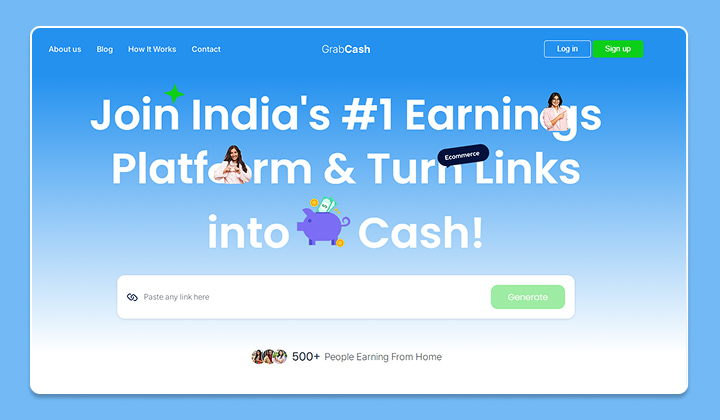
Step 1: Go to GrabCash
Visit the GrabCash website. You can access it from your phone, tablet, or desktop browser.
Step 2: Sign up
Click on Sign Up and create your account using your email or phone number. There’s no paperwork, no KYC, and no hidden catches. Just enter a few basic details and you’re in.
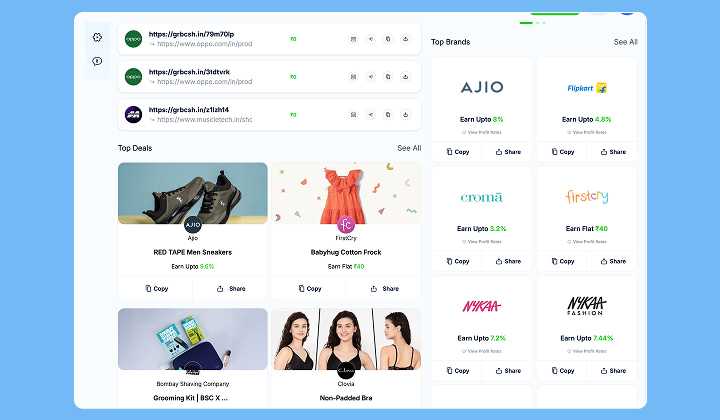
Step 3: Explore featured deals or pick a product you like
Start by browsing through offers from brands like Flipkart, Myntra, Ajio, and Amazon. These are handpicked deals that are already popular. If you have something specific in mind, you’re not limited to just these. You can pick any product you like from a partner store.
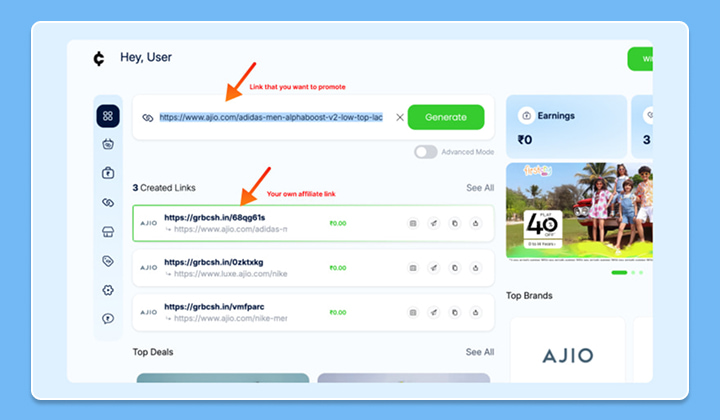
Step 4: Generate a shareable link
Once you’ve got the product, grab its link from the store and paste it into the “Generate Link” section inside GrabCash. The platform will instantly create a unique affiliate link for you. That’s the one you’ll share to start earning when people buy through it.
Tips to Maximise Your Affiliate Earnings
Now that we’ve established how much of an advantage affiliate marketing is for both brands and creators, here are some tips for creators to make the most out of their affiliate ventures.
- Pick a high-commission niche
If you’re just starting, you can start small with just 1-2 niches. But do make sure that the products you promote have a high commission rate. In fitness and lifestyle niches, rates can go up to 10-20%. These niches are also ideal for beginners. However, if you have the expertise and can build a relevant following, then niches like web hosting can also be lucrative.
- Expand your target beyond Tier 1 cities
India’s tier 2 and tier 3 cities have significant potential when it comes to both demand and purchasing power. Even international brands like Puma and Adidas have high projections from these regional markets. That’s why it makes sense to target audiences from these regions and tailor your content accordingly. Think reels in regional languages, and directly sharing through WhatsApp broadcasts or Telegram channels. These can be effective in getting more sales.
- Diversify your channels
For most affiliate marketers, there’s one channel that gets in the audience like a blog or Instagram page, and then there’s another that turns that audience into a high-converting community through recurring purchases.
So if you have a website that’s getting views and converting, consider building an email list. If you have an Instagram page that’s getting comments and DMs for product links, consider building a Telegram channel to share flash deals and early sale access.
That way, you don’t just have an audience, but you’re also building a lead funnel that consistently converts.
- Build targeted strategies to get the most out of sale season spikes.
India’s sale seasons see some of the biggest e-commerce traffic spikes in the entire year. Brands have been known to make one-third of their annual revenue in these 1-2 months alone. So plan your content with high-value pitches like offers, combos and discounts, during these periods to get more sales.
- Automate, streamline and scale
Set up efficient mechanisms like DM automations and automated link sharing through Telegram channels. This will negate manual link sharing entirely once an ecosystem is set up. Now you can save time and instead focus on creating more content and promoting more products.
Wrapping Up
Affiliate marketing offers clear benefits for both creators and businesses. For creators, it’s a low-risk way to monetize content with flexibility and control. For businesses, it’s a performance-based model that drives traffic, leads, and revenue without upfront costs.
By understanding how affiliate marketing works and what each side stands to gain, both parties can build long-term partnerships that are cost-effective and scalable. The key is finding the right platforms, tracking performance, and staying transparent.
Whether you’re a brand looking to grow or a creator aiming to earn more, affiliate marketing is a strategy worth investing in.
FAQs
Can I start affiliate marketing in India with zero investment?
Yes, you can start affiliate marketing in India with zero upfront investment. Aggregator platforms like GrabCash allow you to generate affiliate links for major e-commerce stores like Amazon, Flipkart, and Myntra for free. You can promote these links directly on free channels like Telegram, WhatsApp, Instagram, or YouTube.
Is affiliate marketing still profitable in 2026?
Absolutely. The global affiliate marketing industry is projected to reach $48 billion by 2027. With e-commerce expanding rapidly into regional and Tier 2/3 markets, beginners who focus on niche products, high-converting discount communities, and authentic reviews can build substantial recurring revenue.
What is affiliate marketing?
Affiliate marketing involves promoting products or services and earning a commission for each sale or lead generated through your referral.
How do I start with affiliate marketing?
Begin by choosing a niche, selecting affiliate programs that align with your audience, and creating content that incorporates your affiliate links.
Do I need a website to be an affiliate marketer?
While a website can be beneficial, it’s not mandatory. You can use social media platforms, email newsletters, or messaging apps to share your affiliate links.
Do I need followers to earn through affiliate marketing?
Not necessarily. While having an audience helps, platforms like GrabCash let you earn just by sharing links on Telegram, WhatsApp, Facebook groups, or with friends and family.
How much can I earn through affiliate marketing?
In India, affiliate earnings vary widely. New creators can earn ₹5,000-₹10,000 per month, while top affiliates with strong niches and traffic can cross ₹1 lakh. Your audience size, niche, and effort make all the difference.
How do I get paid?
Your earnings are tracked in real-time. You can withdraw to your bank account as soon as you hit the minimum payout threshold.