

As of late 2026, hybrid work has become the dominant model for corporate India, with 63% of organizations embracing hybrid arrangements and 70% of tech organizations opting for long-term hybrid models. Meanwhile, India’s freelance base remains the largest globally at over 15 million. White-collar hiring continues to grow steadily, largely driven by Tier-2/3 city talent and specialized roles like AI and Machine Learning.
Remote work in India has moved past its pandemic-era phase. While fully remote roles have stabilized, flexible and platform-based work has become a growing segment of the labor market. Here is the latest data on India’s remote, hybrid, and gig economy.
Work From Home Statistics (2026): Top Picks
- 70% of Indian tech organizations have adopted a long-term hybrid work model.
- India’s gig workforce grew 55%, from 7.7 million (FY21) to 12 million (FY25).
- Gig workers are projected to reach 23.5 million by 2029-30.
- AI/ML hiring consistently tracks at 25% to 54% year-on-year growth throughout 2026.
- India has 15 million+ registered freelancers, the largest base of any country.
What Percentage of India’s Workforce Works Remotely or Hybrid?
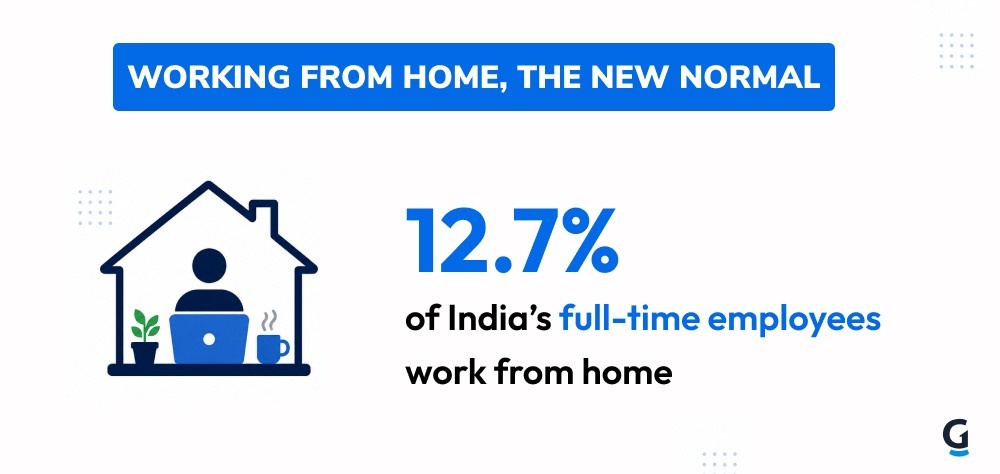
Hybrid work has vastly overtaken fully remote setups in India. According to NASSCOM’s industry tracking, 63% of firms across India have adopted hybrid working. Among large tech enterprises, that figure jumps to 70%.
The most universally accepted schedule is 3 days in the office and 2 days at home, with 26% of firms preferring this specific split.
Note: While global studies (such as Forbes Advisor US) track fully remote work around 12.7% and hybrid around 28.2% for the American market, India’s tech and consulting sectors index much higher on hybrid adoption, though fully remote roles remain concentrated in freelancing and gig work rather than traditional corporate employment.
| Work Model Trend in India | Adoption Rate |
| Firms using hybrid models | 63% |
| Tech organizations in long-term hybrid | 70% |
| Most popular hybrid schedule | 3 days in-office / 2 remote |
| Preferred by large enterprises (1,000+ employees) | 83% adoption rate |
Remote Work vs. “Return to Office” (RTO) Mandates
- According to the March 2026 Voice of India report by Great Place To Work, 63% of Indian employees are now working entirely on-site. However, employee preference leans heavily toward flexibility, with 39.4% actively preferring a hybrid model over fully on-site or fully remote setups.
- Indian professionals increasingly view remote flexibility as a non-negotiable right rather than a corporate perk. A Randstad Workmonitor survey revealed that 52% of Indian employees would quit a job if it lacked sufficient flexibility, a figure significantly higher than the global average of 31%.
- Even when corporate office environments are highly rated, strict attendance mandates drive turnover. A JLL Future of Work report found that while 82% of Indian corporate employees have mandated office days, 40% are simultaneously at a high risk of leaving their jobs within the next year.
This staggering attrition risk is heavily fueled by a 54% burnout rate among Indian workers, making inflexible 5-day RTO policies a critical business risk for talent retention.
Expert Analysis: Why Non-IT Sectors & GCCs are Driving Remote/Hybrid Hiring
A significant shift in 2026 is where flexible jobs are coming from. While headline IT services hiring remained flat or slightly negative earlier in the year, Non-IT sectors and Global Capability Centers (GCCs) accelerated their remote-friendly hiring.
- The Rise of Tier 2 & Tier 3 Flex Spaces: NASSCOM notes that nearly 70% of large enterprises are exploring flexible office setups in non-metro cities. Employers are tapping Tier 2 talent to reduce metro infrastructure load and support employees who prefer working from their hometowns.
- GCC Southern Expansion: Global Capability Centers continue to outpace domestic IT in hiring. Southern markets are acting as GCC hiring hubs, with cities like Chennai seeing 19% YoY growth and Hyderabad seeing 15% YoY growth in mid-2026, heavily utilizing hybrid models to attract top-tier talent.
- Non-IT Remote Work: Sectors like Insurance (up 24% YoY in August 2026) and Education are aggressively hiring for hybrid and remote roles, proving flexibility is no longer exclusive to the software sector.
How Fast Is Remote Job Growth in India in 2026?
- The Naukri JobSpeak Index reached 2,858 in March 2026, up 9% year-on-year, closing FY26 with 8% annual growth, sharply up from 2% growth in FY25.
- February 2026 was even stronger in isolation, with the JobSpeak Index climbing 12% year-on-year to 3,233 points.
- AI-related roles are the fastest-growing category. AI/ML hiring grew 25% YoY in June and surged to a staggering 54% YoY growth by August 2026, spanning metros like Kolkata, Hyderabad, and Delhi-NCR.
- Fresher hiring (0-3 years’ experience) grew 16% year-on-year, spread across both metro and non-metro markets.
- Tier 2 city remote workers may earn 10-20% less than metro counterparts for the same role.
India White-Collar Hiring Growth by Sector (FY26, YoY)
| Sector/metric | YoY growth |
| Overall white-collar hiring | +8% |
| AI/ML hiring | +45% |
| Fresher hiring (0-3 yrs) | +16% |
| Hospitality | +21% |
| BPO/ITES | +18% |
(Sources: Naukri, Naukri Blog, India Employer Forum)
How Big is India’s Gig Economy in 2026?
- Gig workers in India rose to 12 million in FY25, up from 7.7 million in FY21, a 55% increase, according to the Economic Survey 2025-26.
- Growth is credited to smartphone penetration crossing 800 million users and 15 billion UPI transactions processed every month.
- Gig workers now represent over 2% of India’s total workforce.
- Non-agricultural gig work is projected to reach 6.7% of the workforce by 2029-30, contributing roughly ₹2.35 lakh crore to GDP.
- NITI Aayog’s original projection put the gig workforce at 2.35 crore (23.5 million) workers by 2029-30.
- The India Skills Report 2026 found flexible roles, including gig work, now account for 16% of India’s workforce, with 72% still in permanent employment.
India’s Gig Workforce Growth Timeline
| Year | Gig workers in India |
| FY21 (2020-21) | 7.7 million |
| FY25 (2024-25) | 12 million |
| FY30 (projected) | 23.5 million |
Projected Gig Workforce Skill Mix by 2030
| Gig skill category | Projected share by 2030 |
| High-skilled | 27.5% |
| Low-skilled | 33.8% |
| Medium-skilled | 38.7% |
Much of this gig growth happens at the individual level, as people find more ways to make money from home and take on delivery, mobility, or task-based platform work alongside or instead of a full-time job.
(Sources: DownToEarth, NITI Aayog, PMWares)
How Big is India’s Freelance Economy in 2026?
India Freelance Economy at a Glance
| Metric | Figure |
| Registered freelancers in India | 15 million+ |
| Freelance platforms market (2025) | USD 265.1 million |
| Freelance platforms market (2033 projected) | USD 1,536.2 million |
| Average freelancer income | ₹20 lakh/year |
| Freelancers earning ₹40 lakh+ | 23% |
| Freelancers under 30 | 60% |
- India has the largest registered freelancer base of any country in the world, with more than 15 million freelancers.
- Freelancers could eventually account for as much as 50% of India’s workforce, with the domestic freelance market size estimated at nearly $25 billion.
- India’s freelance platforms market generated $265.1 million in revenue in 2025 and is projected to reach $1,536.2 million by 2033, a CAGR of 25.1%.
- The average Indian freelancer earns around ₹20 lakh per year, and 23% cross ₹40 lakh annually.
- 60% of India’s freelancer base is under 30.
(Sources: Quantumrun, Razorpay, Grand View Research)
Which Cities and Sectors are Driving Remote Work Growth?
- Hospitality, BPO/ITES, oil and gas, education, and real estate all posted double-digit year-on-year hiring growth in 2026, while headline IT hiring stayed flat even as AI-specific roles within it surged.
- Non-IT sectors are increasingly the source of remote and hybrid job creation, not just metro-based tech firms.
- Global capability centers (GCCs) continue to expand hiring across Indian metro markets, a trend closely tied to hybrid and remote-enabled roles.
Sector-Wise Hiring Growth in India (FY26, YoY)
| Sector | YoY hiring growth |
| Hospitality | +21% |
| BPO/ITES | +18% |
| Oil & Gas | +15% |
| Education | +15% |
| Real Estate | +14% |
| IT (overall) | Flat |
| AI/ML (within IT) | +45% |
(Sources: Naukri)
The Impact of Hybrid Work on Female Workforce Participation
- Flexible hours have significantly reduced the drop-out rate of returning mothers. Mid-career retention of women has improved, with hybrid policies and diversity governance reducing maternity-related attrition by 7%.
- Women now make up a massive portion of India’s 15 million registered freelancers, using platforms like Upwork to bypass traditional corporate commute constraints and rigid office hours.
- IT firms and Global Capability Centers (GCCs) are actively using remote-first roles to meet ESG and gender diversity targets. Women now constitute 35% of India’s technology industry, with flexible work serving as a key retention tool.
- The government’s Periodic Labour Force Survey (PLFS) consistently shows rising urban female workforce participation. Wider adoption of remote and hybrid hiring practices has nearly doubled women’s participation in the Indian start-up ecosystem to 40%.
The Hidden ROI: Time and Cost Savings for Indian Workers
For professionals based in India’s congested Tier-1 metros, the shift to hybrid work has reclaimed hundreds of hours annually.
- Employees avoiding daily commutes in cities like Bengaluru, Mumbai, and Delhi-NCR save an average of 1.5 to 2.5 hours per day. Annually, this translates to roughly 300 to 500 hours reclaimed for personal time, upskilling, or family.
- Fully remote workers who have relocated from Tier-1 metros back to their Tier-2 or Tier-3 hometowns save upwards of 30-40% on their primary living expenses, particularly in rent and daily transport costs.
- It is not just employees saving money. By adopting hot-desking and downsizing physical office footprints through hybrid models, Indian enterprises are significantly reducing their real estate overheads.
What are the Highest-Paying Work From Home Jobs in India?

- Data scientists in India can expect a salary range of ₹10 LPA to ₹40 LPA, with demand spread across finance, e-commerce, healthcare, and tech.
- Full-stack developers earn ₹18-45 LPA, one of the most in-demand and flexible remote roles.
- Digital marketing strategists working with global clients earn ₹15-35 LPA.
- Senior content strategists serving US or UK market audiences from India typically earn ₹18-28 LPA, a premium tied to international hiring rather than domestic pay scales.
- Indian product managers with 3+ years of experience can access global remote roles paying $80,000-150,000 a year, though these require strong asynchronous communication and remote collaboration skills.
- The average remote worker in India now earns 22% more than office-based counterparts in similar roles, per the Remote Compensation Report.
Highest-Paying Work From Home Jobs in India (2026)
| Role | Salary range | Notes |
| Data Scientist | ₹10-40 LPA | Demand across finance, e-commerce, healthcare |
| AI/ML Engineer | ₹25-60 LPA | Fastest-growing hiring category in FY26 |
| Cloud Architect | ₹30-70 LPA | Tied to India’s cloud services growth |
| Full-Stack Developer | ₹18-45 LPA | High flexibility, broad demand |
| Product Manager (global roles) | $80,000-150,000/year | Requires strong async communication |
| Digital Marketing Strategist | ₹15-35 LPA | Global client work pays a premium |
| Content Strategist (international) | ₹18-28 LPA | Premium tied to US/UK market clients |
What Skills are Most in Demand for Remote Jobs in India in 2026?
| Skill category | Specific skills | Why it’s in demand |
| AI/Machine Learning | Python, ML frameworks, prompt engineering | Fastest-growing hiring segment (+45% YoY FY26) |
| Cloud computing | AWS, Azure, GCP, Kubernetes, Docker | 25%+ annual growth in India’s public cloud market |
| Cybersecurity | Security architecture, threat analysis | 1.5 million unfilled roles projected |
| Data analytics | SQL, Excel, Power BI, Tableau, Python | Cross-industry demand: finance, healthcare, e-commerce |
| Software/DevOps engineering | Full-stack development, CI/CD, cloud-native tools | Core to India’s remote-first tech hiring |
| Digital marketing & content | SEO, content strategy, performance marketing | High demand from D2C brands and global clients |
| Soft skills | Asynchronous communication, self-management | Differentiator across all remote-capable roles |
Global Work From Home Statistics
- 52% of remote-capable workers globally now operate in hybrid arrangements, according to Gallup’s ongoing workforce surveys, making hybrid the default model for knowledge work worldwide, not just in India.
- Technology leads global remote adoption at 47% fully remote, followed by finance and insurance at 40%.
- By 2030, 40% of the global workforce is expected to operate in remote or hybrid setups.
- Global digital remote jobs are projected to reach 90 million by 2030, according to the World Economic Forum.
- The global virtual assistant workforce numbers over 40 million, with the Philippines supplying 1.5 million+, India around 1 million, the US about 400,000, and Canada around 200,000.
- The global freelance platforms market is valued at $7.3 billion in 2026 and projected to reach $24.2 billion by 2033, an 18.6% CAGR.
- Remote work options are the single biggest driver of career transitions globally in 2026, ranking above higher pay, work-life balance, or meaningful work, according to FlexJobs.
- Google searches for “remote work hiring now” surged 829% in early 2026, reflecting how strong global demand for remote roles has become even as available positions lag behind interest.
(Sources: Gable, Grand View Research, Toggl)
What Does the Future of Remote Work in India Look Like?
- Gig work is expanding annually at a rate that outpaces overall employment growth.
- Employer hiring intent for FY 2026-27 stands at 40%, up from 29% the year before.
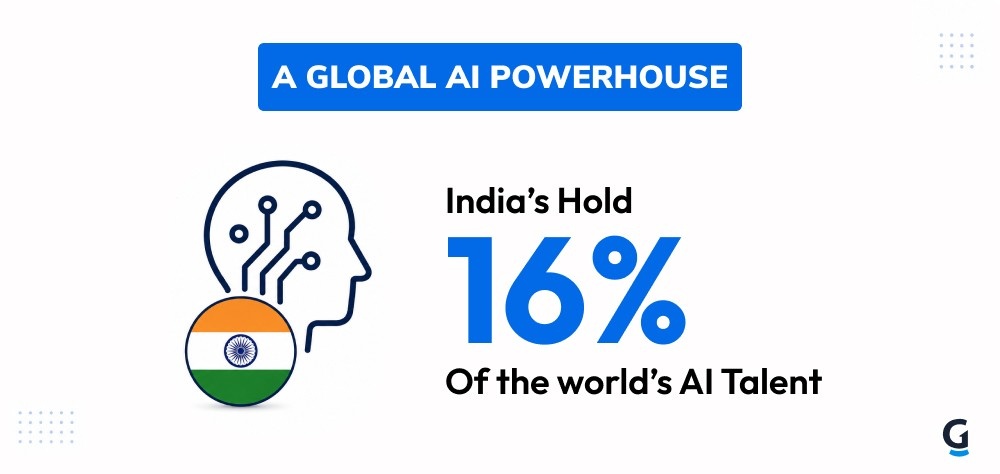
- India holds 16% of the world’s AI talent, a factor likely to keep AI and remote-capable hiring growing faster than the broader market.
- The Economic Survey 2026 has explicitly called for social security frameworks and income stability measures for gig and platform workers, signaling that policy is starting to treat this as a permanent part of the workforce.
For job seekers and freelancers in India, “work from home” now spans several distinct categories: fully remote employment, hybrid corporate roles, platform-based gig work, and independent freelancing, each with its own growth rate, pay structure, and entry point. Tracking the right category, rather than treating remote work as one trend, is the more useful way to plan around it through the rest of 2026.
(Sources: India Skills Report 2026, India Today)
FAQs
How do I earn Rs 30,000 per month from home?
To earn ₹30,000 monthly from home, focus on high-value digital services like content strategy, SEO, or web development on monthly client retainers. Alternatively, full-time remote corporate positions in customer success, inside sales, and digital marketing offer stable salaries with performance bonuses. Landing just two or three steady freelance clients or one remote employer easily hits this target.
Which jobs can I work from home?
Remote jobs span entry-level, technical, and creative fields across many industries. Popular flexible options include virtual assistance, online tutoring, social media management, customer support, and data entry. If you have technical expertise, high-demand roles like full-stack web development, SEO writing, graphic design, software engineering, and digital marketing strategy allow you to work from anywhere.
What work can ladies do from home?
Women can excel in any remote role, but outcome-based positions offer the best flexibility to manage daily life. Top choices include freelance writing, virtual assistance, graphic design, online teaching, HR recruitment, and digital marketing consulting. These flexible roles allow professionals to set their own daily work hours, manage project workloads independently, and deliver results without fixed shifts.
I want to work remotely for a US or UK company. How do I get started?
Stop just “looking for a job” and start offering a specialized service. Global companies hire Indian talent for specific expertise but strictly screen for asynchronous communication skills. Build a strong digital portfolio, like a solid LinkedIn or GitHub profile, and target global remote job boards rather than domestic portals to land high-paying international roles.
How can I spot a fake work-from-home job scam?
Fake remote jobs are everywhere, but the golden rule is simple: a legitimate company will never ask you for money. Massive red flags include recruiters demanding “security deposits” or “training fees,” conducting entire interviews via WhatsApp text, emailing from standard Gmail accounts, or offering unusually high pay for basic tasks.